01 — The Problem
Overworked editors, overlooked mistakes.
At the Long Beach Current, the copy editing team often worked with limited capacity. Like many student-run newsrooms, editors balanced coursework, jobs, and publication deadlines, leaving little time for multiple rounds of review before articles went live.
The fast pace of publishing increased the chance of style inconsistencies or small factual oversights slipping through — not from a lack of care, but from limited bandwidth.
As a side project, I explored whether a lightweight automated review tool could help act as a safety net for editors by flagging common issues before publication.
02 — The Solution
An AI trained on the newsroom's own rules.
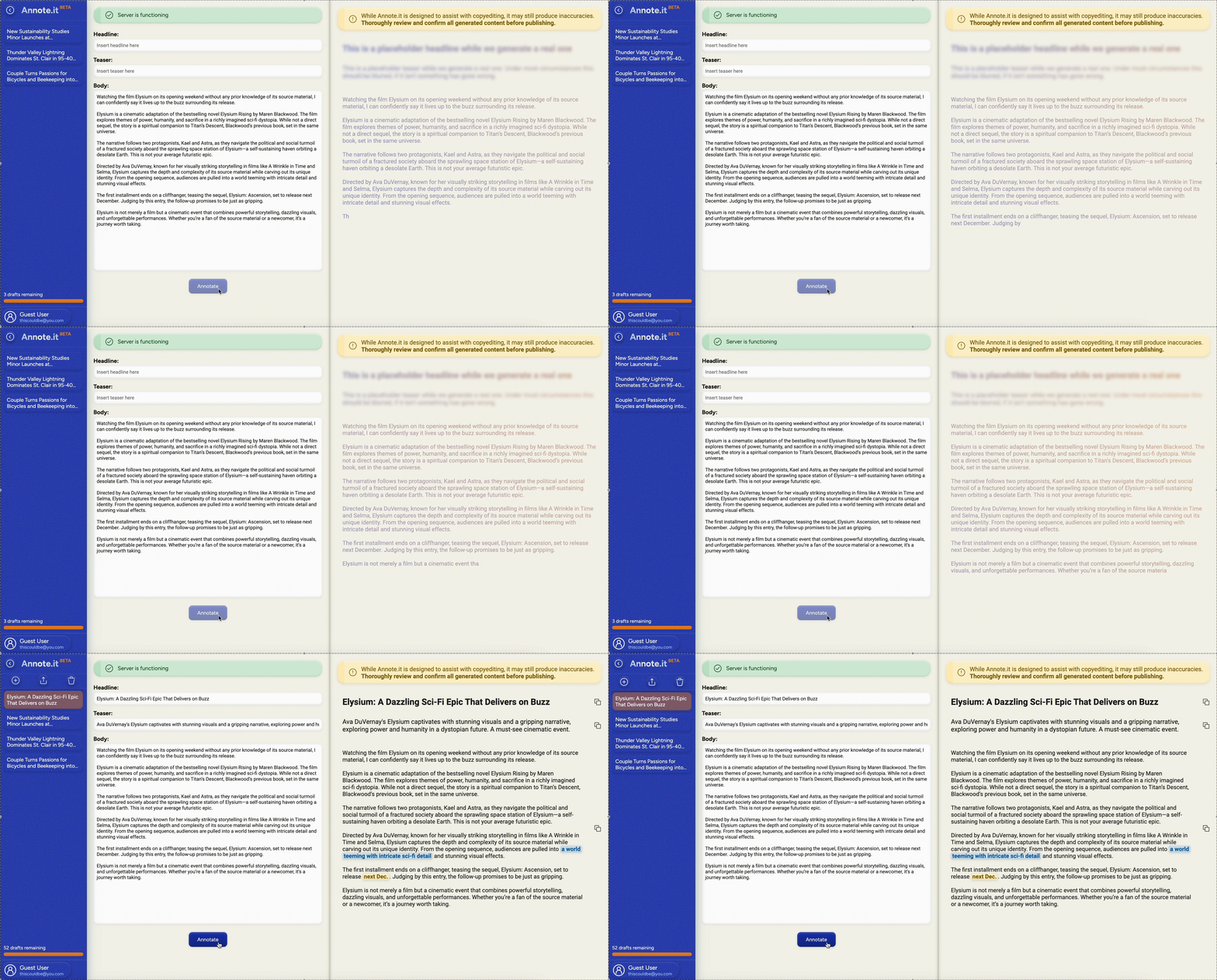
Annote is a web-based copyediting assistant that runs articles through an AI model trained on AP style and Beach Media's internal style guide. Editors paste their draft, hit annotate, and get back a corrected version with every change highlighted and explained.
The tool doesn't just flag generic grammar issues — it understands the specific conventions the newsroom follows and applies them consistently across every article.
01
Paste
Editors input their headline, teaser, and article body into a clean, distraction-free interface.
02
Annotate
The AI processes the article against AP style, the newsroom style guide, SEO best practices, and factual accuracy.
03
Review
Corrections appear inline with color-coded highlights. Editors can accept or reject each change individually.
04
Understand
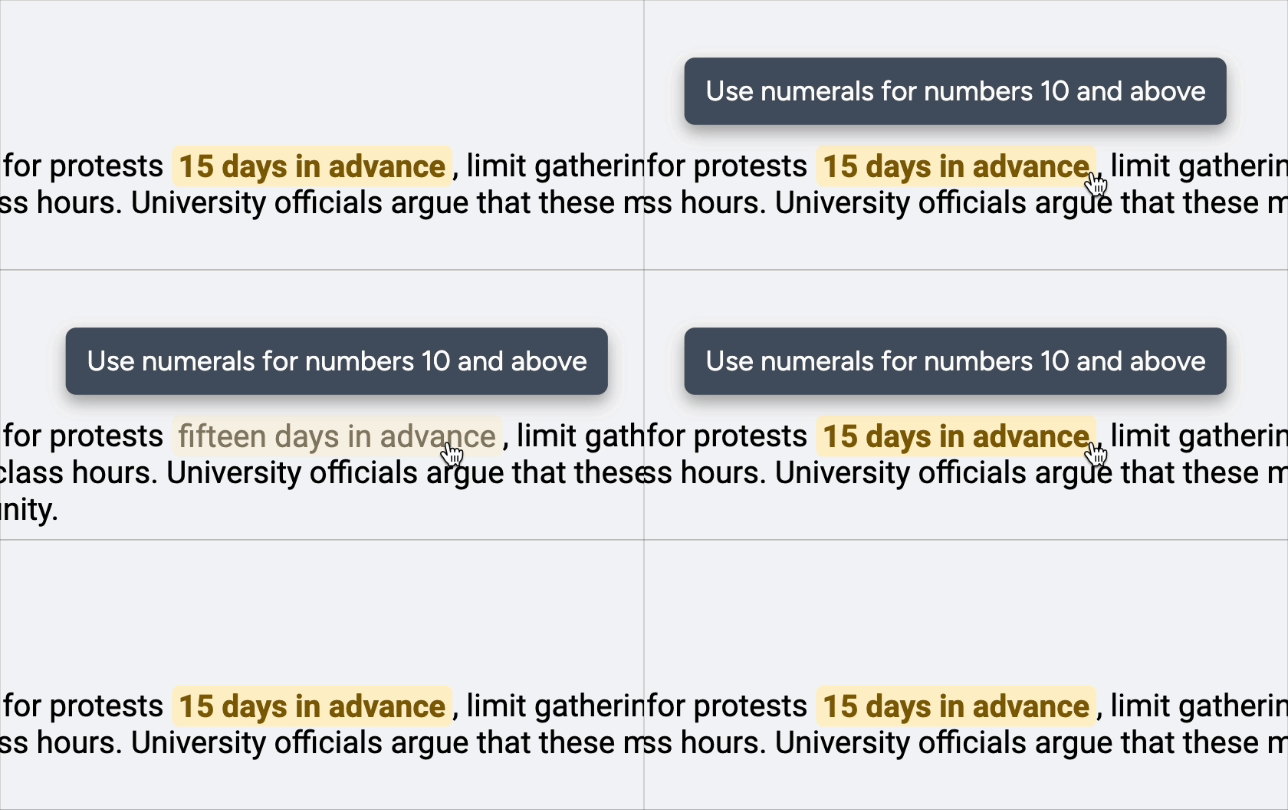
Each correction includes a tooltip explanation — editors learn why a change was made, not just what changed.
05
Generate
If no headline or teaser is provided, Annote generates one based on the article content, following house style.
06
Share
Corrected articles can be shared via compressed URL — no account needed to view a shared result.
03 — Correction Categories
Three layers of editorial review.
Every article is analyzed across three distinct categories, each visually distinguished so editors can quickly assess the type and severity of each suggestion.
AP Style
Enforces Associated Press style rules and the newsroom's internal style guide — from number formatting to title capitalization to attribution standards.
SEO Optimization
Suggests improvements for search visibility — keyword usage, headline structure, and meta-relevant phrasing that help articles rank without compromising editorial voice.
Fact Warnings
Flags potential factual inaccuracies, unverifiable claims, and statements that may need a second source — giving editors a heads-up before publication.
04 — Technical Architecture
How it works under the hood.
Annote is a full-stack web application with a Python backend handling AI processing and a vanilla JavaScript frontend for the editing interface. Firebase manages authentication and usage tracking.
Frontend
Vanilla JS
Custom diff rendering, inline corrections with tooltips, typewriter animations, resizable split-panel layout
Backend
Python Server
Processes articles through OpenAI API with structured prompts trained on AP style and the house style guide
Auth & Data
Firebase
User authentication, custom claims for draft limits, admin roles, and usage tracking
05 — Next Steps
From tool to full editorial workflow.
Annote launched as a standalone copyediting assistant, but the next phase would embed it directly into the newsroom's publishing pipeline — turning it from a tool editors visit into a layer that runs across the entire editorial process.
01
Teamspaces
Shared workspaces where an entire editorial team can access articles, view correction history, and collaborate on edits in one place.
02
Editorial Desk Roles
Role-based permissions — writers submit drafts, copy editors review corrections, and managing editors approve final versions before publication.
03
Publishing Integration
Direct integration with the newsroom's CMS so corrected articles flow straight into the publishing queue without manual copy-pasting between tools.
What I Built
End-to-end, from problem to product.
Identified the staffing problem in the newsroom and proposed an AI-assisted editing tool as a solution
Designed and built the full-stack application — frontend, backend API, Firebase integration, and admin dashboard
Engineered AI prompts trained on AP style and Beach Media's internal style guide for accurate, context-aware corrections
Built a correction UX with color-coded inline highlights, accept/reject toggling, and tooltip explanations for each change
Implemented a draft usage system with Firebase custom claims, admin controls, and server health monitoring
Added sharing via compressed URL encoding, article history with local storage, and a feedback rating system